Market research used to be the thing that took forever and delayed everything else.
Two weeks for competitive analysis. Three weeks for market sizing. A month for customer research if you wanted real interviews.
Projects waited. Decisions stalled. By the time the research was done, the market had moved.
AI changes the equation—not by replacing research rigor, but by compressing the timeline for rigorous research.
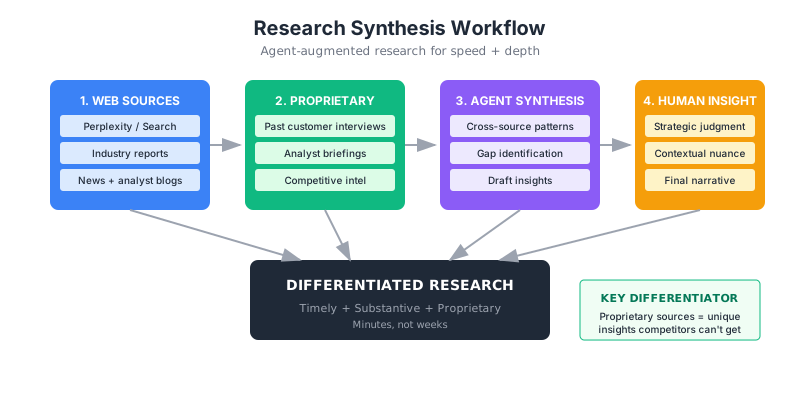
What AI Does Well in Research
Data Gathering at Scale
AI can process vast amounts of public information quickly:
- Competitor websites, documentation, and public communications
- Analyst reports and industry publications
- Customer reviews across multiple platforms
- Job postings that reveal strategic priorities
- Patent filings and technical publications
- Social media and community discussions
What would take a human analyst weeks to compile takes AI hours to gather and organize.
Pattern Recognition
AI excels at finding patterns across large datasets:
- Themes in customer feedback across thousands of reviews
- Shifts in competitor messaging over time
- Common objections appearing in win/loss data
- Market trends emerging across multiple sources
Synthesis and Summarization
Converting raw data into structured insights:
- Competitive profiles from scattered information
- Market landscape summaries from multiple reports
- Customer persona drafts from behavioral data
AI handles the gathering and pattern-finding. Humans handle the "so what"—the interpretation that turns data into decisions.
What Still Requires Humans
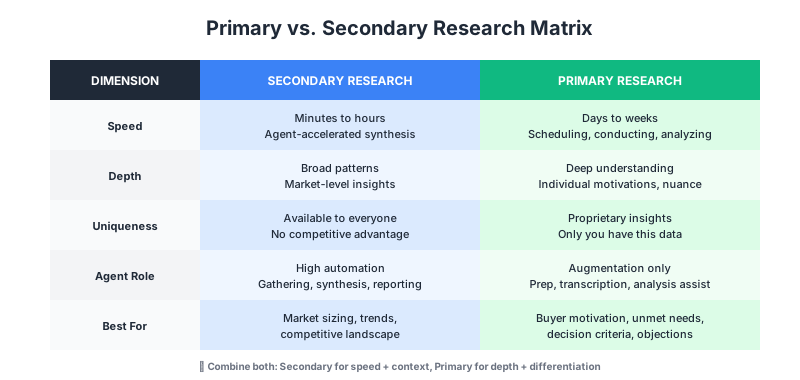
Primary Research
AI can't conduct customer interviews. It can't sit across from a buyer and read the hesitation in their voice when they describe their current solution.
What AI can do: help you prepare better questions, analyze transcripts faster, and identify patterns across interviews.
Strategic Interpretation
Data shows what is happening. Interpretation explains why it matters.
AI might surface that a competitor has hired thirty ML engineers in the past quarter. The interpretation—are they building a competitive threat? Pivoting their product? Struggling with technical debt?—requires human judgment.
Insight Validation
AI-generated insights need human validation:
- Is this pattern real or a data artifact?
- Does this match what we see in customer conversations?
- Are there explanations the AI might have missed?
The 10x Research Workflow
Day 1: Automated Data Gathering
AI agents collect:
- Competitor website snapshots and changes
- Recent news and press releases
- Review site data and sentiment
- Industry report summaries
- Social media mentions and discussions
Day 2: Pattern Extraction
AI processing:
- Theme extraction from customer feedback
- Competitive positioning analysis
- Market trend identification
- Gap and opportunity flagging
Day 3: Human Synthesis
PMM review and interpretation:
- Validate AI-surfaced patterns
- Add context from customer conversations
- Connect to strategic questions
- Identify areas needing deeper research
Day 4-5: Deep Dives
Targeted investigation of specific questions:
- Customer interviews on key topics
- Expert consultations
- Competitive deep dives
- Quantitative validation where needed
Research that used to take 3-4 weeks now takes 5 days—without sacrificing rigor. The time saved goes into deeper analysis and better interpretation, not into skipping steps.
Quality Controls
Faster research creates new quality risks. Build these controls:
Source verification. AI can cite outdated or incorrect information confidently. Verify key claims against primary sources.
Bias checking. AI reflects patterns in its training data. Check for systematic biases in competitive assessments.
Triangulation. Don't rely on single sources. Cross-reference AI findings against multiple data points.
Human gut-check. If AI conclusions don't match your market intuition, investigate. Sometimes AI is right and intuition is wrong. Sometimes it's the reverse.