Learning Objectives
By the end of this unit, you will:
- Recognize the parallel between analyst and AI evaluation methods
- Build the "satisfier layer" that wins systematic evaluations
- Design briefing strategies for human analysts
- Prepare content that wins AI recommendations
- Create the evaluation flywheel that compounds over time
Section 1: The Evaluation Parallel
~8 minTwo Systematic Evaluators
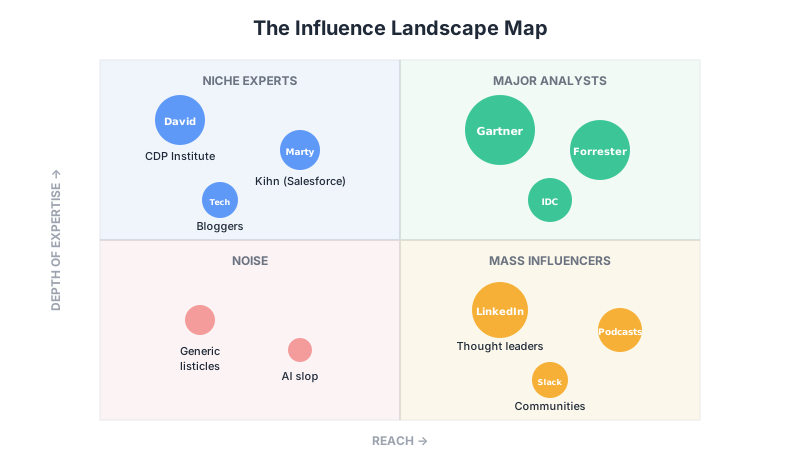
For decades, product marketers have understood that industry analysts — Gartner, Forrester, IDC — evaluate vendors through a systematic lens. Analysts have criteria. They score against those criteria. They publish rankings that influence billions of dollars in enterprise buying decisions.
Now there's a second systematic evaluator: AI. When a buyer asks ChatGPT or Claude to compare vendors in your category, the model is also evaluating you against implicit criteria. It's also scoring you, in a sense. And its synthesis influences buying decisions with increasing frequency.
The Key Insight
The discipline that wins with analysts is remarkably similar to the discipline that wins with AI. Both are systematic evaluators who gather evidence, apply criteria, and produce rankings that influence buyers.
The PMM who gets good at winning analyst evaluations is inadvertently building the skills to win AI evaluations.
What Both Evaluators Reward
Whether you're preparing for a Gartner Magic Quadrant or optimizing for ChatGPT recommendations, both reward the same disciplines:
Human Analysts
- Completeness: Did you address all criteria?
- Specificity: Are claims concrete?
- Evidence: Can you substantiate?
- Clarity: Easy to parse and compare?
- Consistency: Claims align across sources?
🤖 AI Agents
- Completeness: Coverage of likely criteria
- Specificity: Concrete, quotable facts
- Evidence: Third-party citations
- Clarity: Structured, parseable content
- Consistency: Same story everywhere
Section 2: How Systematic Evaluation Works
~10 minThe Analyst Methodology
When Gartner builds a Magic Quadrant or Forrester publishes a Wave, they're applying a structured methodology. Understanding that methodology reveals what you need to satisfy.
Criteria Definition
Analysts define evaluation criteria before scoring. Criteria come from market research, buyer interviews, and analyst expertise.
Evidence Gathering
Analysts collect from multiple sources: vendor briefings, customer references, product demos, RFPs, and public information.
Scoring & Ranking
Each criterion gets a weight and score. The methodology produces a ranking — quadrant position, wave placement, market leader.
Narrative Interpretation
Analysts interpret scores. Strengths and cautions often matter more than the position itself.
The AI Methodology
AI evaluation is less structured but follows similar patterns:
- Implicit criteria: When buyers ask AI to compare vendors, the model applies criteria derived from its training and the question. "Best for enterprise" implies scale, security, support.
- Source evaluation: AI gathers from training data and retrieval sources. It weights sources by perceived authority — analyst reports, documentation, customer reviews.
- Synthesis: AI produces a comparison that weighs evidence. Not numerical, but it effectively ranks through framing and emphasis.
- Citation: AI cites sources. Getting cited is the AI equivalent of getting quoted in an analyst report.
Key Insight
Both analysts and AI are systematic evaluators who gather evidence, apply criteria, and produce rankings. The PMM who understands this can optimize for both simultaneously.
Section 3: The Satisfier Layer
~10 minWhat Systematic Evaluators Need
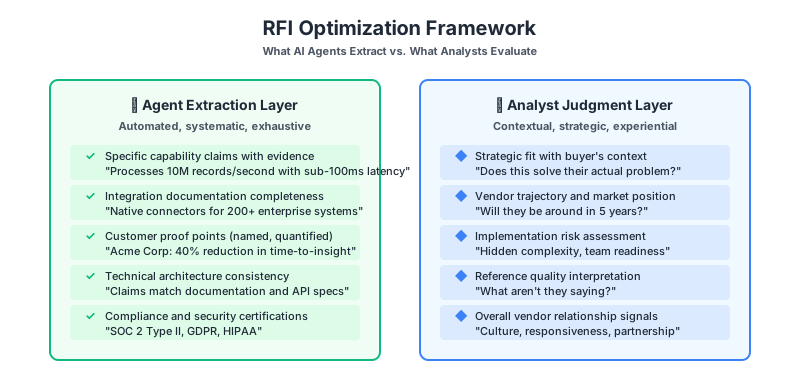
Systematic evaluators — human analysts or AI models — need certain things to evaluate you favorably. Call this the "satisfier layer": the content and evidence that satisfies evaluation criteria without requiring the evaluator to dig.
Feature Documentation
For every capability, clear documentation of what you do and how it works. Not marketing claims — functional descriptions.
Quantified Outcomes
Numbers that support claims. Performance benchmarks, customer metrics, efficiency gains. Both evaluators weight quantified evidence.
Customer Validation
References who speak to value. Named case studies with specific outcomes. G2/TrustRadius reviews that corroborate positioning.
Competitive Differentiation
Clear articulation of how you differ. Analysts compare explicitly; AI compares implicitly. Both need your distinctions.
🔮 Roadmap Visibility
Where are you going? Analysts evaluate vision. AI surfaces future-oriented content. Show your trajectory.
Structured Data
Machine-readable formats — comparison tables, spec sheets — that AI can parse accurately.
Building the Satisfier Layer
Satisfier Layer Checklist
- Capability matrix mapping features to evaluation criteria
- Customer evidence bank with named case studies, quotes, references
- Technical documentation (API refs, integration guides, security whitepapers)
- Analyst-ready briefing deck covering positioning, differentiation, roadmap
- Structured comparison content AI can parse
- Regular refresh schedule (quarterly minimum)
Section 4: Briefing Strategies
~10 minWinning Analyst Briefings
The analyst briefing is where PMMs directly influence evaluation. Getting it right requires preparation and strategy.
Do This
- Know the criteria before briefing
- Lead with differentiation (not slide 15)
- Bring evidence for every claim
- Anticipate and address cautions
- Leave reference materials
Avoid This
- Generic company overview
- Unsupported assertions
- Hiding weaknesses
- Marketing fluff without substance
- Leaving nothing behind
Preparing for AI Evaluation
You can't schedule a briefing with AI, but you can prepare through content strategy:
Comparison Content
Create explicit comparison pages: "How we compare to Competitor X." Use structured formats AI can parse.
Implied Criteria
What criteria do common queries imply? "Best for mid-market" = pricing, ease, support. Cover these explicitly.
🌱 Seed the Model
AI training is a lagging indicator. Publish the claims you want AI to surface — they'll appear in future responses.
Monitor & Correct
Check how AI presents you regularly. Create content that corrects errors. Models update over time.
The Evidence Advantage
Analysts discount unsupported assertions. AI does too — it weights claims with third-party validation higher than first-party marketing claims.
This means customer case studies, analyst citations, and review site ratings all contribute to better AI positioning. The satisfier layer you built for analysts directly improves AI recommendations.
Section 5: The Evaluation Flywheel
~7 minHow Positioning Compounds
Strong analyst positioning and strong AI positioning reinforce each other:
- When Gartner ranks you as a leader → that ranking gets cited in AI responses
- When AI consistently presents you favorably → buyers enter analyst research with a positive prior
- The satisfier layer you built for one evaluator → serves the other
The Reverse Flywheel
Companies that underinvest face the opposite:
The Negative Spiral
Weak analyst positioning → unfavorable AI citations → buyers start with negative prior → harder to win analyst evaluations → weaker positioning.
The gap compounds. Catching up gets harder every quarter.
Key Takeaways
- Analysts and AI are both systematic evaluators. They reward the same disciplines: completeness, specificity, evidence, clarity, consistency.
- Build the satisfier layer. Feature documentation, quantified outcomes, customer validation, competitive differentiation, and roadmap visibility.
- Prepare for analyst briefings strategically. Know criteria, lead with differentiation, bring evidence, anticipate cautions.
- Prepare for AI through content. Comparison-friendly content, implied criteria coverage, proactive publishing, ongoing monitoring.
- The evaluation flywheel compounds. Strong analyst positioning reinforces AI positioning, and vice versa.